
Green Hills: Scale, Reinvention, and Residential Continuity
Green Hills is defined by adaptability, location, and residential continuity. Located just southwest of downtown Nashville, the neighborhood developed as a low-density residential area shaped by generous lots, mature trees, and proximity to the city’s major institutions.
Unlike Nashville neighborhoods defined by a single historic era, Green Hills has evolved through multiple cycles of reinvestment. Its character comes not from uniformity, but from consistency of use. This has long been a place for living rather than spectacle, where architecture responds to lifestyle, access, and long-term residency rather than tourism or short-term density.
Living in Green Hills feels distinctly residential despite its central location. Streets are calm, blocks are established, and daily life unfolds at a measured pace despite the neighborhood’s central location.
Architectural Character and Housing Stock
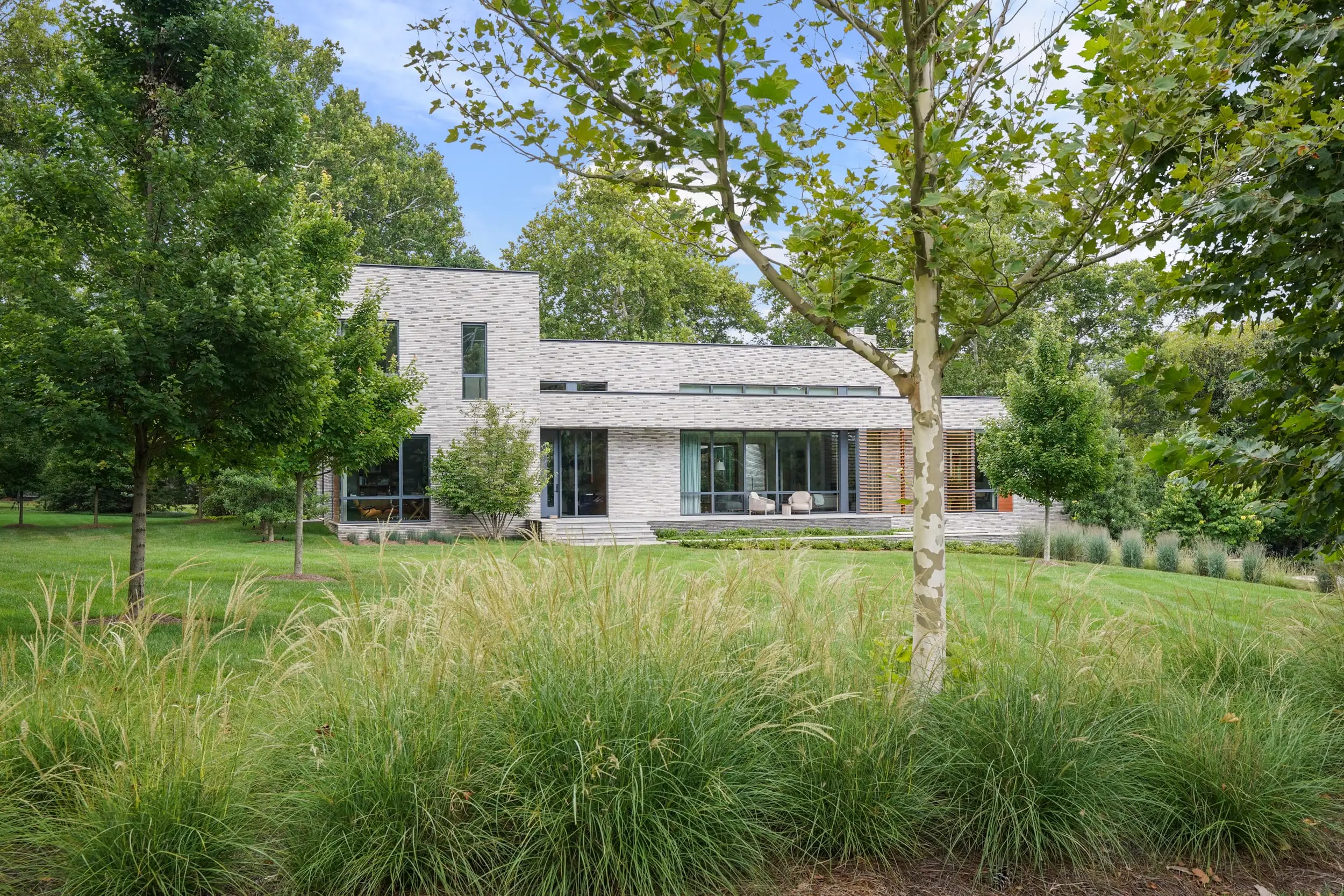
Green Hills housing stock reflects its layered development. Traditional mid-century and postwar homes sit alongside renovated properties and contemporary new construction. Architectural styles vary, but most homes share a similar relationship to site: setbacks, mature landscaping, and a clear separation between private and public space.
In recent years, teardown and reinvention have reshaped portions of the neighborhood. When executed thoughtfully, newer homes emphasize scale, proportion, and material quality that align with the surrounding streetscape. The strongest examples prioritize longevity and livability over trend-driven design.
What distinguishes Green Hills architecturally is not preservation of a single style, but continuity of residential intent. Homes here are designed to support daily life over time.
Landscape and Street Pattern
Landscape plays a quiet but essential role in Green Hills. Mature tree canopies, rolling topography, and established yards shape the neighborhood’s identity as much as the buildings themselves.
Streets are designed for access rather than speed, reinforcing a sense of calm despite proximity to major corridors. This balance between connectivity and separation is one of Green Hills’ defining characteristics and a key reason it continues to attract long-term residents.
Living in Green Hills
Green Hills attracts buyers who value convenience without urban density. Its location allows quick access to downtown, West End, and Brentwood while maintaining a residential atmosphere that feels removed from constant activity.
The neighborhood appeals to professionals, families, and downsizers seeking stability, space, and strong institutional proximity. Homes are often chosen for how they function over time, including school access, daily routines, and long-term flexibility.
When considering Green Hills, buyers frequently look at Whitland, Belmont / Hillsboro, and Brentwood to compare residential scale, location, and long-term livability.
Real Estate Perspective
From a real estate standpoint, Green Hills remains one of Nashville’s most resilient neighborhoods. Demand is driven by fundamentals: location, schools, lot size, and established residential zoning.
Properties that respect scale, landscape, and neighborhood context tend to perform consistently across market cycles. Success in Green Hills depends less on trend timing and more on understanding how reinvestment fits within the existing fabric.
Green Hills is not static, but it is steady. Its value lies in continuity rather than transformation.
Green Hills illustrates how residential neighborhoods evolve through reinvestment while retaining core architectural intent. For a broader look at how design, layout, and proportion affect long-term livability across Nashville, see architecture and design in Nashville homes. Architectural influences that continue to shape neighborhoods like Green Hills are also covered in Architects of Nashville.
Buyers focused on architectural integrity and long-term livability often track opportunities in this neighborhood through Jake’s List, a curated collection of design-forward homes informed by architectural context rather than surface features. This is a more intentional approach than doing vauge internet searches like "green hills nashville real estate" or "green hills real estate."
Frequently Asked Questions
Why does Green Hills continue to attract long-term residents despite redevelopment?
Green Hills has evolved through reinvestment without changing its residential purpose. Larger lots, established streets, and institutional proximity support long-term living even as individual homes change.
How does Green Hills differ from nearby neighborhoods like Whitland or Belmont Hillsboro?
Green Hills offers more space and separation than Whitland or Belmont Hillsboro while remaining centrally located. It prioritizes residential function over walkability or historic uniformity.
What types of homes tend to hold value best in Green Hills?
Homes that respect lot size, scale, and landscape tend to perform best over time. Buyers respond most strongly to properties that balance reinvention with neighborhood continuity.