

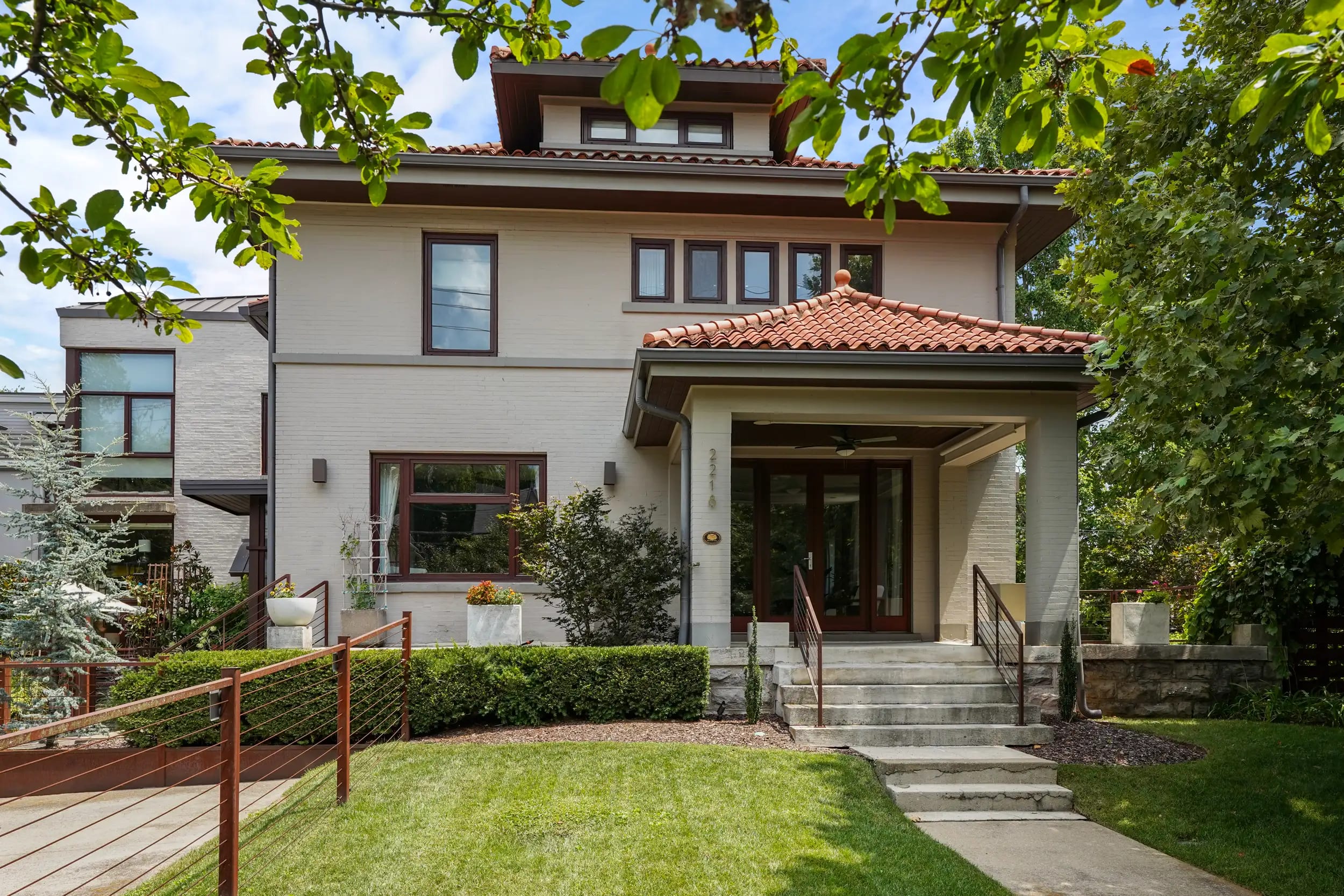
Belmont-Hillsboro: Academic Roots and Residential Architecture
Belmont–Hillsboro is shaped by proximity and continuity. Located just south of downtown Nashville, between Belmont University and Vanderbilt, the neighborhood developed as a residential counterpart to its academic surroundings, resulting in a walkable, well-scaled environment anchored by early twentieth-century homes.
The area’s street grid, lot sizes, and building patterns reflect a period when neighborhoods were designed around daily movement on foot. Homes sit close enough to the sidewalk to support porch culture and street-level interaction, while mature trees and consistent setbacks create a cohesive residential rhythm.
Architectural Character and Housing Stock
Belmont–Hillsboro is defined by a collection of early 1900s residential styles, including American Foursquares, bungalows, and Tudor Revival homes. These houses tend to emphasize proportion, natural light, and durable materials, with front porches and modest floor plans that still function well today.
Renovations and infill have occurred over time, but the neighborhood’s architectural identity remains intact. The strongest updates respect the original scale of the homes and the established streetscape, allowing the neighborhood to evolve without losing its underlying structure.
The result is a residential environment that feels intentional rather than layered through constant replacement.
Walkability and Daily Life
Walkability in Belmont–Hillsboro is not incidental. It is a byproduct of density, proximity, and mixed use. Hillsboro Village provides a small but active commercial center, while nearby campuses contribute cultural activity, events, and steady foot traffic.
Sidewalks, shade, and short distances make daily errands possible without relying on a car. This creates a neighborhood that feels active without being overstimulated, and lively without feeling transient.
Living in Belmont-Hillsboro
Belmont–Hillsboro appeals to buyers who value centrality without sacrificing residential character. Its location offers quick access to downtown, Music Row, and West End, while maintaining a neighborhood identity rooted in design and history.
Homes here are often chosen as much for their setting as their interiors. Buyers tend to respond to how the neighborhood functions over time, not just how a house photographs.
When evaluating Belmont / Hillsboro, buyers frequently compare it with 12 South, Richland / West End, and Green Hills for differences in architecture, walkability, and proximity to major institutions.
Real Estate Perspective
From a real estate standpoint, Belmont–Hillsboro benefits from fundamentals that tend to endure. Historic zoning, architectural consistency, and sustained demand contribute to long-term stability.
Homes that respect original proportions and materials typically perform best. For buyers and sellers alike, understanding architectural context is key to making informed decisions in this neighborhood.
Belmont–Hillsboro remains desirable not because it chases change, but because it absorbs it carefully.
Buyers focused on architectural integrity and long-term livability often track opportunities in this neighborhood through Jake’s List, a curated collection of design-forward homes informed by architectural context rather than surface features.
Frequently Asked Questions
How does proximity to Belmont and Vanderbilt shape daily life in the neighborhood?
The presence of two major universities brings steady foot traffic, cultural events, and institutional stability, but the surrounding residential streets remain quiet and well-scaled. The neighborhood benefits from activity without feeling transient.
What types of renovations tend to hold value in Belmont–Hillsboro?
Renovations that preserve original proportions, porch relationships, and window placement tend to perform best. Buyers respond strongly to updates that improve livability without disrupting the architectural rhythm of the street.
Why do buyers often choose Belmont–Hillsboro over other central neighborhoods?
Belmont–Hillsboro offers a balance that is hard to replicate: walkability, architectural consistency, and immediate access to major institutions. It feels residential first, even while sitting at the center of the city.