

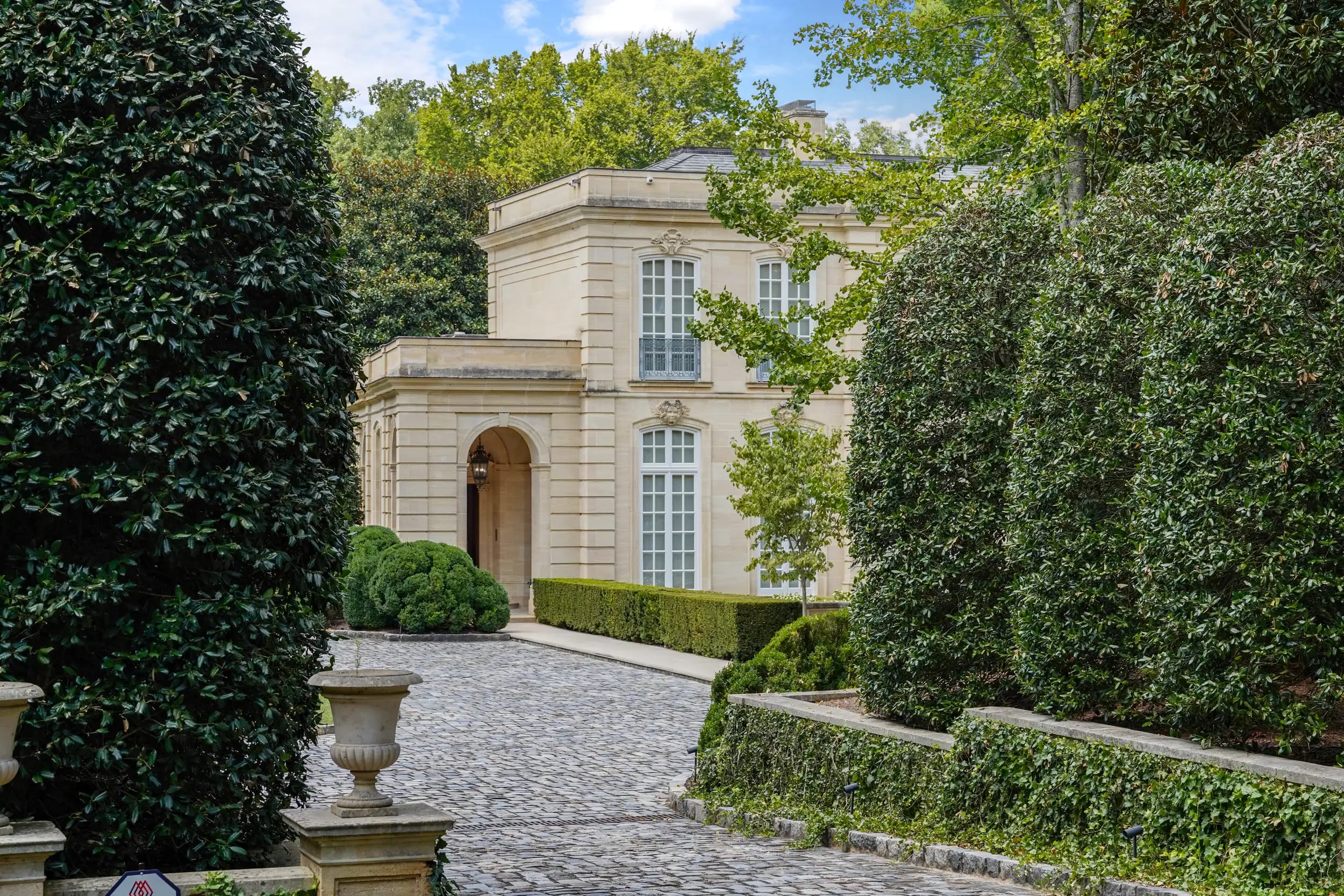
Belle Meade: Estate Scale, Landscape, and Architectural Continuity
Belle Meade is defined by restraint, scale, and long-term intention. Located just southwest of downtown Nashville, the neighborhood developed as a landscape-first environment, where architecture, acreage, and privacy work together rather than compete.
Compared with denser urban neighborhoods, Belle Meade is shaped by large parcels, mature tree canopies, and streets designed for distance rather than speed. The experience of the area is quiet and deliberate. Homes are set back from the road, views unfold slowly, and the rhythm of daily life feels insulated from the city without being disconnected from it.
Architectural Character and Housing Stock
The architectural fabric of Belle Meade reflects its origins as an estate neighborhood. Many homes date to the early and mid-20th century and include Georgian, Colonial Revival, and other classically influenced designs that emphasize symmetry, proportion, and permanence.
These houses are typically defined by substantial setbacks, long driveways, and carefully composed relationships between the home and the surrounding landscape. Newer construction continues this tradition when done well, prioritizing scale, massing, and materials that respect the neighborhood’s established character.
What distinguishes Belle Meade architecturally is not a single style, but a shared discipline. Buildings here tend to value longevity over trend, and coherence over novelty.
Landscape as Structure
In Belle Meade, landscape is not decoration. It is structure.
Large lots, rolling topography, and mature trees shape how homes are sited and experienced. Proximity to Percy Warner Park, Cheekwood, and other protected green spaces reinforces the neighborhood’s connection to land and preservation.
This emphasis on landscape creates a living environment where privacy, light, and long views are as important as interior square footage. It also explains why architectural changes in Belle Meade tend to be incremental rather than dramatic.
Living in Belle Meade
Belle Meade attracts buyers who value discretion, space, and architectural continuity. Its proximity to Green Hills, downtown Nashville, and major institutions allows residents to move easily between privacy and activity without sacrificing either.
Homes here are often chosen not just for their design, but for how they support long-term living. The neighborhood rewards patience, stewardship, and thoughtful decision-making.
Buyers drawn to Belle Meade often also consider West Meade, Whitland, and Green Hills, depending on preferences around privacy, architectural continuity, and access to the city.
Real Estate Perspective
From a real estate standpoint, Belle Meade’s stability comes from fundamentals. Zoning, lot size, and architectural expectations limit overdevelopment and preserve the neighborhood’s identity.
Properties that respect scale, landscape, and proportion tend to hold value across market cycles. For buyers and sellers alike, success in Belle Meade depends less on timing and more on understanding context.
Belle Meade is not about visibility. It is about permanence.
Belle Meade’s long-term value is closely tied to architectural intent, landscape planning, and restraint. For a broader understanding of how these principles shape livability and value across the city, see my overview of architecture and design in Nashville homes. Many Belle Meade properties are also evaluated in relation to the architects and architectural traditions that influenced their design, explored further in Architects of Nashville.
Buyers focused on architectural integrity and long-term livability often track opportunities in this neighborhood through Jake’s List, a curated collection of design-forward homes informed by architectural context rather than surface features. It allows buyers a more thoughtful approach rather than just a internet search of "Belle Meade houses for sale" or "Belle Meade TN real estate" or "Belle Meade real estate" likely won't yield the depth most serious buyers are looking for.
Frequently Asked Questions
What architectural and zoning restrictions affect homes in Belle Meade?
Belle Meade is governed by zoning and design standards that emphasize lot size, setbacks, and overall scale rather than decorative style. These restrictions limit overdevelopment and help preserve the neighborhood’s estate character, which is a major reason architectural continuity has remained intact over time.
Why do homes in Belle Meade feel more private than other Nashville neighborhoods?
Privacy in Belle Meade is created through large parcels, deep setbacks, mature landscaping, and road layouts designed for distance rather than density. Homes are intentionally separated from one another, which changes how the neighborhood feels and functions day to day.
How do buyers typically evaluate value differently in Belle Meade?
Buyers in Belle Meade tend to focus less on short-term finishes and more on fundamentals like land value, siting, architectural restraint, and long-term livability. Context, scale, and stewardship often matter more than trend-driven upgrades.